


Self Storage vs Traditional Warehouse Rental
Self storage offers tailored unit sizing with flexible monthly agreements and autonomous access; traditional warehouse leasing locks tenants into entire floor plates with rigid contracts and heavy overheads. Here is the point-by-point comparison for occupiers and real estate investors.

Two Radically Opposing Models of Procuring Space
Renting a traditional warehouse requires committing to the entire footprint: signing multi-year commercial leases (e.g. 6+6 years in Italy) and assuming full liability for utility bills, building maintenance, and physical security. Self storage inverses this paradigm: tenants contract strictly for the square metres required today, expanding or contracting flexibly as their operational needs evolve.
To explore the mechanics in detail, read our foundational guide: what is self storage and how it operates.
Self Storage vs Commercial Warehouse Rental
| Feature | Self Storage | Traditional Warehouse Lease |
|---|---|---|
| Space Allocation | Strictly tailored: from small lockers (1–2 m²) to commercial units (30+ m²) | Entire fixed floor area, frequently oversized with wasted space |
| Lease Commitment | Flexible monthly terms, cancel anytime with short notice | Rigid, binding multi-year commercial commitments (e.g. 6+6 years) |
| Cost Structure | Variable all-inclusive fee: zero separate utility or service charges | High fixed overheads: rent, power, HVAC, rates, and maintenance |
| Access & Control | 24/7 keyless access via smart locks, PIN keypads, and automated gates | Manual physical locking; key holding must be organized internally |
| Security Infrastructure | HD CCTV, individual door sensors, and cloud logs included | Alarm systems and security monitoring must be funded by tenant |
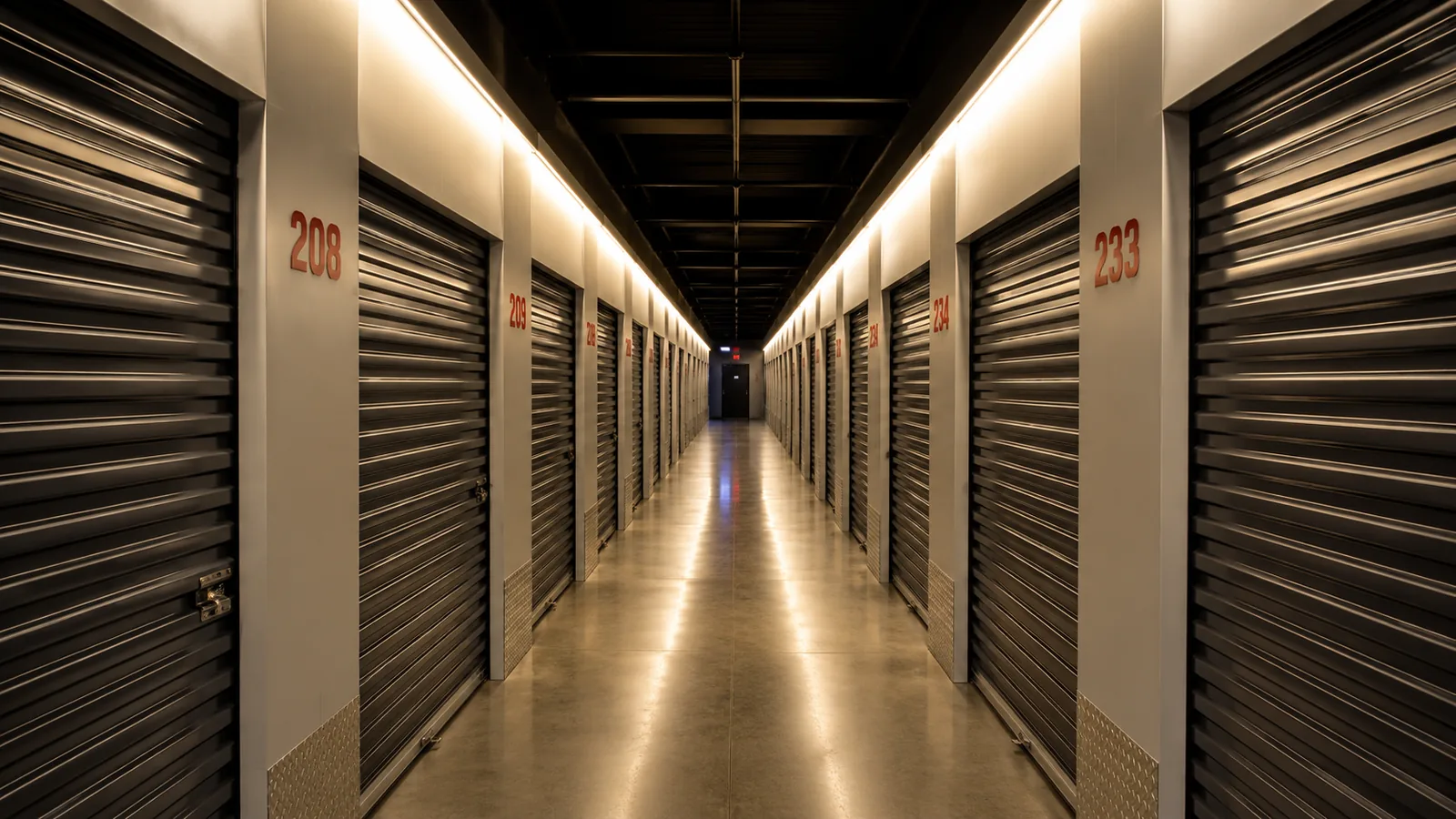
Converting Fixed Real Estate Costs into Variable Expenses
For commercial businesses, a dedicated warehouse represents a rigid fixed cost that penalises cash flow during seasonal dips. Self storage converts real estate into a dynamic variable expense: inventory buffers, legal archives, and equipment take up only the exact footprint required month to month.
- No separate utility bills, property maintenance, or alarm contracts.
- Digital access rights can be granted or revoked instantly for employees.
- Scalable footprint without cumbersome commercial lease renegotiations.
Why Self Storage Multiplies Yield Per Square Metre
For real estate owners, the inverse logic yields tremendous financial upside. A warehouse leased to a single industrial tenant generates a flat single-digit yield and concentrates 100% of counterparty default risk on one contract. Fragmented into modular self-storage units, the identical building serves hundreds of diversified customers, commanding substantially higher rental rates per m².
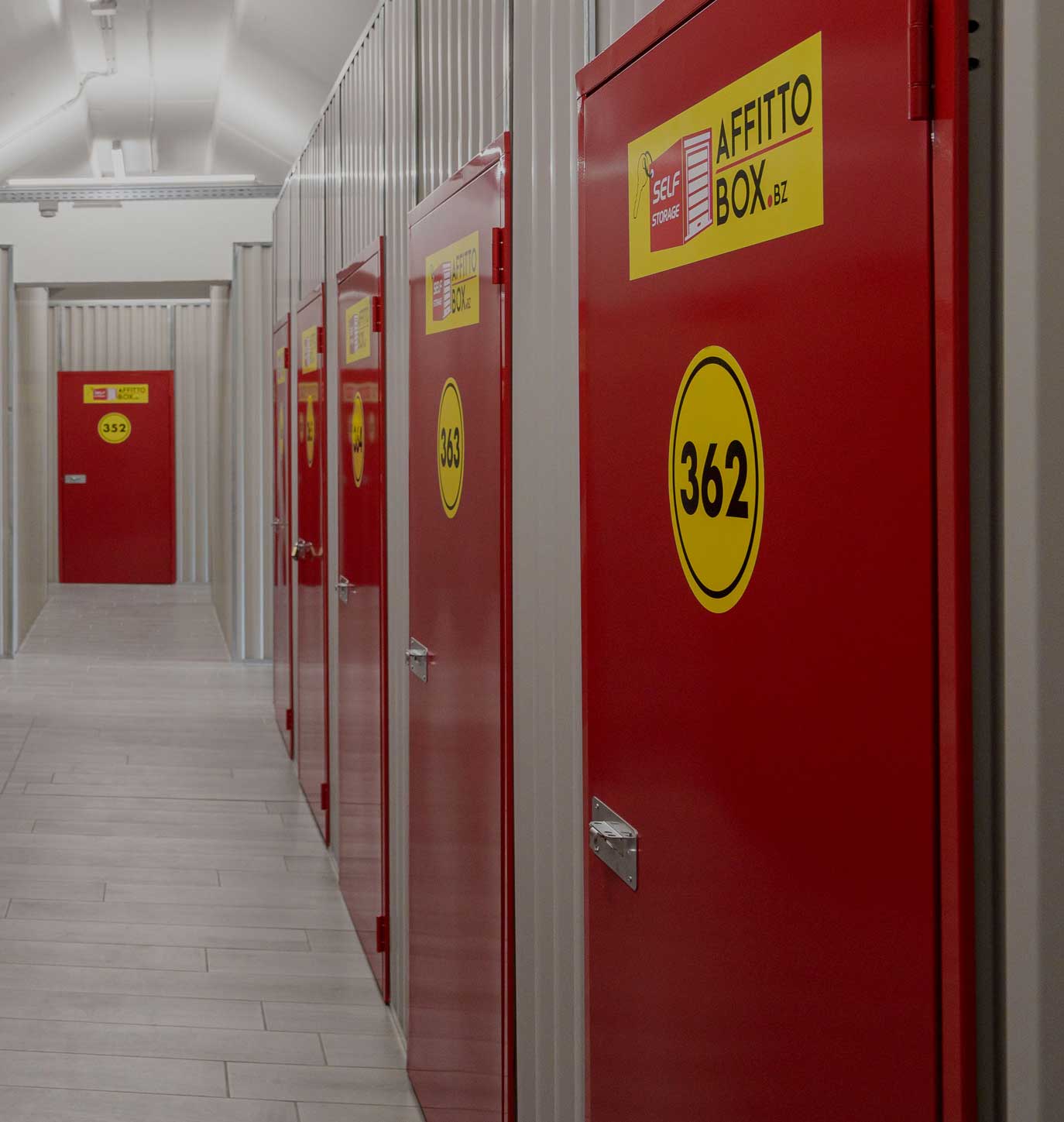
This is our core operational focus: we engineer and build self-storage facilities for property owners, from initial feasibility studies through to turnkey operational handover. See real performance metrics in our Affittobox Bolzano 500-unit case study.
Frequently Asked Questions
Whenever spatial needs are variable, seasonal, or smaller than a full industrial shed: residential moves, business renovations, merchandise buffers, document archiving, or equipment storage. Self storage allows clients to pay strictly for the square metres used, with 24/7 autonomous smart access and zero long-term lease lock-ins.
When an enterprise requires vast, continuous floor plates for dedicated industrial logistics: heavy forklift operations, manufacturing, or freight consolidation. For massive continuous volumes, single-tenant commercial leases can offer economies of scale.
Typically far superior: multi-tier CCTV surveillance, cloud access logs, and individual door alarms are built into the facility infrastructure. In a conventional leased warehouse, security fit-outs must be funded entirely by the tenant.
In the majority of cases, yes, representing one of the highest-yielding repurposing strategies for suburban and urban industrial real estate. We conduct an upfront spatial and market audit to deliver clear feasibility numbers.